




Progress has been made in the research on the properties of new early-high strength grouting materials in Wuhan Geotechnical Institute
Anchoring technology is a commonly used measure for reinforcement in geotechnical engineering, which can fully exert and improve the inherent strength and self-stabilizing ability of the surrounding rock of the tunnel, thereby effectively controlling the deformation of the surrounding rock. It has now become one of the most economical and effective methods to improve the stability of geotechnical engineering and solve complex geotechnical engineering problems. As an important component of the anchoring structure, the grouting body plays a crucial role in improving the bearing capacity of anchor rods (cables). Among them, improving the fluidity, setting time, mechanical strength, and other indicators of the grouting material is the main way to enhance the grouting reinforcement performance.
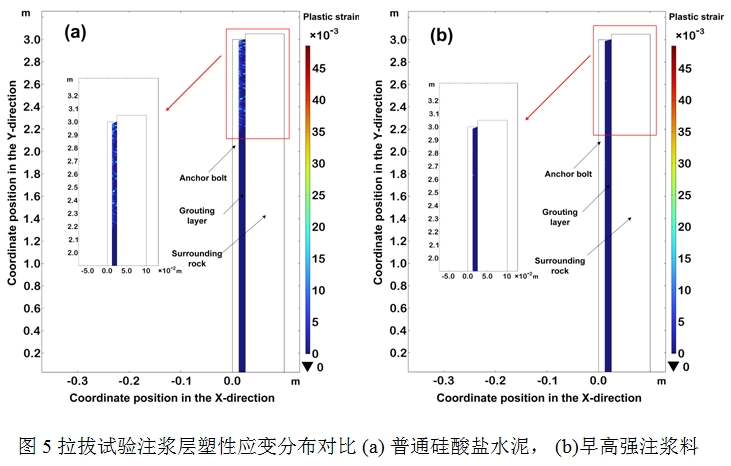
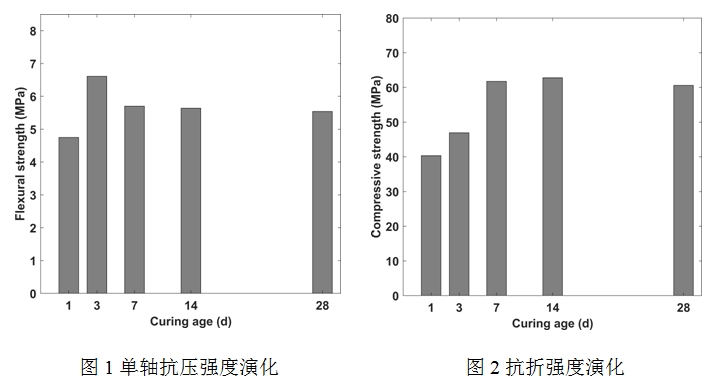
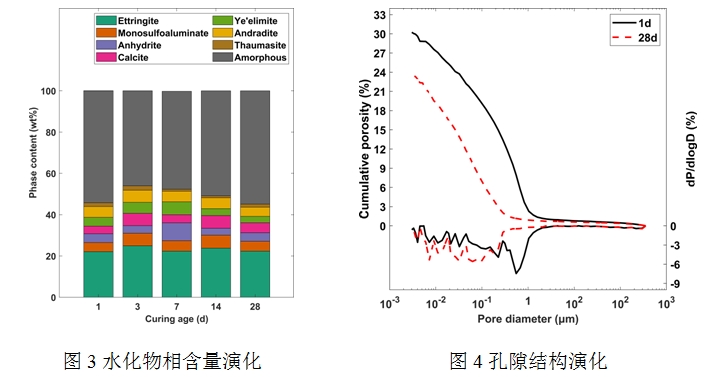
To this end, the research team on construction process mechanics from the Institute of Rock and Soil Mechanics, Chinese Academy of Sciences, has developed a new type of early high-strength grouting material based on ferroaluminate cement clinker, ordinary Portland cement, anhydrite, and limestone powder. Through uniaxial compression tests, X-ray diffraction tests, thermogravimetric analysis tests, mercury intrusion tests, and other macroscopic and microscopic testing techniques, the evolution laws of mechanical strength, hydration products, expansion rate, microstructure, and other performance indicators of the grouting material were systematically studied. The early hydration mechanism was revealed, and the anchoring performance of the early high-strength grouting material was verified through numerical simulations and on-site anchor pull-out tests. The results showed that the initial setting time of the early high-strength grouting material is only 25 minutes, with a final setting time of 40 minutes and a fluidity of 282 mm. The free expansion rate exhibits a nonlinear growth trend, with an average growth rate of 4.51 ‰/d within a 14-day age. The uniaxial compressive strength can reach 40.3 MPa at 1-day age, increasing to 61.7 MPa at 7-day age and remaining stable. The main hydration products of the high-strength grouting material are ettringite and aluminum hydroxide gel, and the phase content remains stable after 1 day of hydration. Due to the rapid increase in the content of hydration products and volume expansion, the pore structure of the high-strength grouting material becomes denser. Numerical simulations and field tests have shown that the early high-strength grouting material significantly improves the anchoring performance of prestressed anchor rods compared to ordinary Portland cement. This new type of grouting material exhibits excellent characteristics of early strength, high strength, and slight expansion during the initial stage of hydration, making it suitable for engineering needs such as anchoring grouting and stratum reinforcement.
The research results have been published in the top journal in the field of civil engineering, Construction and Building Materials. The research work was funded by the Second Tibetan Plateau Scientific Expedition and Research Program (No. 2019QZKK0904), the National Natural Science Foundation of China Major Project (No. 51991392), and the National Key Research and Development Program (No. 2021YFC3100805, 2021YFC3100802).
Paper link: //doi.org/10.1016/j.conbuildmat.2023.134324
More geotechnical information focus on LIMTA Piling Machinery.